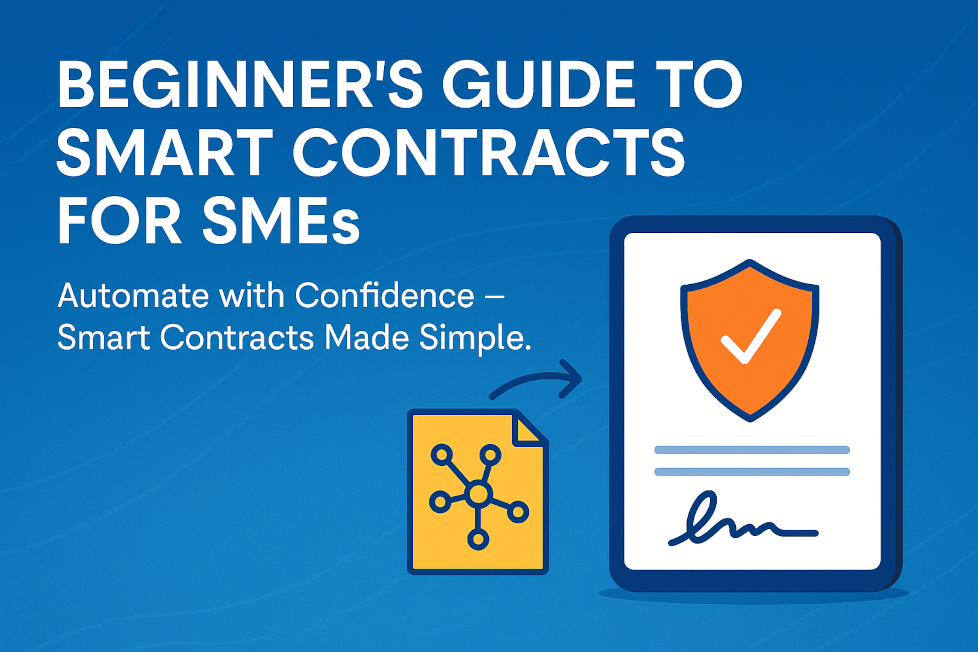
"Automate with Confidence — Smart Contracts Made Simple."
Introduction
If you run a small business, you likely spend a lot of time handling agreements, invoices, approvals, and tracking deliverables. But what if you could automate those operations securely — without expensive software or endless paperwork?
Welcome to smart contracts: blockchain-powered tools that automate business processes, reduce errors, and boost trust.
In this beginner’s guide, we’ll explain how smart contracts work, where to use them, and how SMEs in Estonia are already benefiting.
What Are Smart Contracts?
A smart contract is a self-executing agreement stored on a blockchain. It automatically carries out actions — like releasing a payment or granting access — when pre-set conditions are met.
There’s no middleman, no waiting, and no room for manipulation.
Why Smart Contracts Matter for Small Businesses
You don’t need to be a tech company or a crypto expert. Here’s how Estonian SMEs benefit from blockchain automation:
✅ Automate Repetitive Tasks
No more manual approvals. Smart contracts handle payments, document sharing, and renewals automatically.
✅ Cut Operational Costs
You’ll reduce reliance on legal and administrative teams by replacing third-party verification with blockchain code.
✅ Improve Trust and Accuracy
Smart contracts are tamper-proof, public (if needed), and error-resistant. This reduces disputes and ensures compliance.
Real-World Smart Contract Use Cases for SMEs
| Scenario | Smart Contract Function |
|---|---|
| Freelancer Agreements | Release funds automatically after work is approved |
| Rental or Lease Payments | Automate recurring charges or trigger penalties on delays |
| Invoice Settlement | Auto-pay upon delivery confirmation or milestone approval |
| Document Certification | Digitally notarize and timestamp contracts or IP content |
Want to implement these quickly? Sygnarissupports clients via the IÈUMÌ Smart Business Platform — a blockchain-powered automation tool that requires no software installs or technical skills.
How to Start Using Smart Contracts (No Coding Required)
Here’s your step-by-step onboarding path:
Identify a repeatable business process (e.g. invoice or contract)
Choose a smart contract platform (e.g. Ethereum, Polygon, or IÈUMÌ)
Partner with a digital consultant like Sygnaris Blockchain Services
Launch your first contract and test its performance
Use visual dashboards or APIs to monitor automation
What to Keep in Mind
Smart contracts are immutable — plan carefully before deploying.
Use audited smart contract libraries or hire blockchain professionals.
Ensure compliance with data laws — especially GDPR if dealing with EU customers.
Why SMEs in Estonia Are Leading the Way
Estonia is already known as a digital pioneer. From e-Governance to blockchain-based identity, the country fosters innovation. By using smart contracts, Estonian SMEs can:
Reduce friction in B2B processes
Integrate with ERP or CRM tools
Certify processes and documents with legal-grade protection
This isn’t the future — it’s what Sygnaris clients are doing today.
Final Thoughts
Smart contracts are no longer reserved for crypto startups — they’re practical, affordable, and transformative for SMEs.
Whether you’re managing freelancers, issuing licenses, or validating documents, smart contracts can streamline your operations while improving trust.
Let Sygnaris guide your smart contract journey — from strategy to deployment.
This post is protected by Blockchain
At Sygnaris OÜ, we don’t just follow innovation—we build with it. This post, like all our original content, is protected and certified through IÈUMÌ, our trusted blockchain partner platform—ensuring authenticity, transparency, and data integrity at every step.